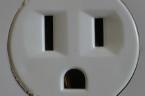
 Kids sure do love sticking things in electrical outlets. They usually only do it one time though , after they learn that it doesn't feel very good. Eager parents follow up the crying with a call to have someone come out and make sure nothing is damaged. Typically, the circuit breaker will stop the flow of electricity by shutting off power to a particular area of the house.
If you have never reset a breaker, its pretty easy. It involves going to the main electrical panel, which is typically on the exterior of the house, or in the garage. In some condominiums, it can even be found in a closet. Once you find it you will see that one of the breakers isn't aligned with all the rest. All the breakers will be in the "on" position except for the one that tripped. It won't be in the "off" position though. Instead, it will be tripped midway between "on" and "off". Before you turn the breaker on, make sure the child didn't jamb or break off anything inside the outlet. If that is the case, the breaker may not turn back on anyway, and it could spit out a spark or even smoke.
Once the coast is clear, simply push the breaker all the way to the "off" position and then push it to the "on" position. Power should be restored to the outlet.
 At some point, you are going to have to contend with toilet repair. Oh, and how disgusting they can be. Maybe you just want to forgo all the repairs and just replace the old toilet with a new toilet. That's fine and it's not terribly difficult either. For some tips on replacing a toilet click here.
After securing the toilet to the floor, many people will caulk around the base of the toilet and this is fine. I'll tell you that I prefer using something that is common in the trades, but maybe not so common with homeowners: plaster-of-paris.
I like plaster-of-paris for a couple of reasons. Like caulking, it will still keep leaks at bay, but it has an advantage over caulking in that it cleans up nicely and will stop a toilet from rocking.
If you are installing a white toilet, rather than almond or other non-white toilet, the plaster-of-paris will dry with a seamless finish from the toilet to the floor. You have an open time of several minutes to place the toilet, and run a wet sponge around the base of the toilet to clean the floor and push the plaster-of-paris into all the nooks and cranies. What you are left with is a perfect finish and a stable toilet. Just let it dry before you put any weight on it.
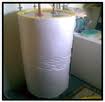 As the weather gets colder, its probably a good idea to insulate your water heater. This is as easy as buying a water heater jacket and throwing it around the water heater. Most water heaters in Las Vegas are kept in the garage where it is much cooler than the air conditioned house. The outer skin of the water heater transfers the cooler air temperature ultimately to the tank, although there is insulation between the skin and the tank.
So go to the store and buy a jacket for your water heater. Secure it around the tank and keep it warm and snuggly. While you are at it, you can buy some pipe insulation and wrap the pipes at the top of the water heater. One pipe will be the hot water outlet and the other is the cold water inlet. Wrap the pipes, particularly the hot pipe, to slow down the transfer of heat through the copper pipe to the ambient air.
Your water heater should have heat traps built into these pipes or fittings to keep the hot water from creeping up and out of the tank as it becomes more buoyant than the cold incoming water. This can also be accomplished by creating a high loop with the copper flex lines to the point where the pipe rises higher than the point that it enters the wall.
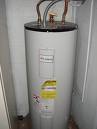 Many water heaters have been replaced prematurely due to an inexperienced person trying to diagnose and fix the problem. Common sense and isolating the problem would go a long way in determining the problem and ultimately how to fix it. This advice is also good for the problems that we all face in our everyday lives.
So here is what happened...a homeowner reported water heater trouble; he is not getting much hot water. It is not as hot as it once was, nor does it last very long. The homeowner tells me that this has been going on for several weeks and in fact he replaced the water heater just last week and it still is doing the same thing....I'm seeing a pattern here.
I went to the property and sure enough the water heater was brand new. When I looked at it, the burner was firing and didn't stop. I realized what was happening. I asked him about his water bill. Sure enough, his water bill was MUCH higher than normal, as was his gas bill. I went to the street, pulled off the water meter cover and the meter was moving like crazy. I told him he had a slab leak on the hot water line. I turned off the valve supplying water to the water heater and the meter stopped moving.
What was happening was since there was a leak in the hot water line AFTER the water heater, the water was constantly running through the water heater and out of the broken pipe under the slab. The water never stayed in the tank long enough to get warm. This explains the water heater constantly firing and the high gas bill. The high water bill obviously was from the leak in the pipe flowing 24/7.
Had the homeowner isolated the problem and figured out that his high utility bills and water heater were all related, he wouldn't have replaced the water heater and saved some cash.
 So you know how everyone is trying to save money these days? Well, an out-of-state landlord called us to go look at his property. He was receiving complaints from his tenants that doors he recently had installed weren't working properly. Apparently, he hired two guys that didn't speak English very well, and probably weren't licensed or legal.
Wow! One of the doors these guys installed was hung upside down. Instead of the doorknob being at waist level, it was at shoulder level. Then they installed a door on the exterior of the house. For this they used an interior hollow-core door. This type of door, as the name infers, is basically hollow and offers little security. None of the exterior doors they installed had any weatherstripping, and the doorjambs had been cut 2 inches short so that there was a gap that bugs could freely travel through.
Maybe the landlord picked up these guys in a parking lot of a home center, or maybe the "Handyman in Las Vegas" heading in the yellow pages. Your safest bet is to ask around. It's probably best to talk to your friends and neighbors and see who they trust.
 Yesterday we went to repair a customer's sliding glass door. He said he was tired of fighting with it to get it to open. When he called in we told him it we would need to get the correct rollers for the bottom of the door, take the door off, and be done within a couple of hours.
When we got there and looked at it, sure enough you had to throw your shoulder into it to get it to budge. However, the track was filthy. It was covered in dirt with a layer of dog hair mixed in for good measure. Instead of the cost of replacing the rollers on the bottom of the door, we first tried to clean the track. This was pretty disgusting but effective.
Fortunately, the existing sliding glass door rollers were made of metal (some are actually plastic). So after the track was cleaned, we lubricated the rollers. I'm happy to report that the door is as smooth as butter.
Of course, the homeowner watched everything we did and decided to tackle the other door by himself. There is that old saying, "If you give a man a fish he can eat for a day, but if you teach a man to fish he can eat for a lifetime". I'm guessing he will maintain his sliding glass door by himself from now on.
 We are all keenly aware of the many Las Vegas bank owned properties for sale. Many of these properties need some kind of repairs or rehab. The banks that own them want to spend as little as possible to make them sell.
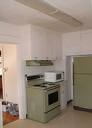
We had to give an estimate on replacing some appliances that had been stolen from a bank-owned house. One of the items was a stainless steel double wall oven. As you might guess, these are not cheap. A builder-grade model typically starts at just under $2000.00.
We submitted a proposal and the soon after the agent called and said that the bank's asset manager went on Craigslist for Las Vegas and found a double wall oven for $75.00. Naturally, the asset manager was questioning our pricing. Now you might ask yourself how someone could sell such a beautiful appliance for a mere fraction of what it normally would cost. The answer is that is was a vintage 1970's oven in the most sought-after color: avocado green!
The bank moans because they sold the property "as is" and doesn‘t feel that it has to spend a dime, and the buyer wants a new kitchen like you might see on MTV's "Cribs". Somewhere in the middle the two shall meet. In this case the bank gave a credit to the buyer and closed the deal. Another day in the life of a Las Vegas Handyman.

I tried to be a Good Samaritan by moving a refrigerator into my sister's new home, which has a sheet vinyl floor. As I was trying to maneuver the fridge into its niche, one of the wheels ripped out a good chunk of the floor right in a high-traffic area. Needless to say, she wasn't very happy.
Patching vinyl flooring requires that you cut out the damaged area and replace it with a matching piece. The trick is to find a good matching piece.
In my sister's case, the house was new and it was easy to match since the builder left a little extra rolled up in the garage. If you can't find a match, you may have to cut out a piece from a less conspicuous area, such as the pantry floor, or under the refrigerator or oven.
Consider yourself lucky if the sheet vinyl has a pattern, such as squares with a border. You will be able to blend in the repair so that it is virtually invisible. If the vinyl has a pattern with no borders, it will be more difficult to conceal the fix.
Use a carpenter's square and lay it along the border of the pattern. Use a sharp utility knife and cut out the damaged section. The carpenter's square will keep the cuts at 90 degrees. As you cut, keep lots of pressure on the square to keep it from moving. If the square moves you will have to repeat this step except you will have to cut a larger area.
A popular pattern of flooring re-creates the look of ceramic tile with grout lines. With this pattern, cut down the middle of the grout lines.
Remove the damaged piece. You will use this piece as a template to cut a replacement patch. You can tape the damaged piece exactly over the replacement vinyl. Use the square and knife and cut around the patch. When you cut, remove the tape from that side and then replace it after the cut is made.
If you have to use a patch from another area of the glued floor, remove it carefully. You want to keep the patch in the best condition possible. You may want to warm up the replacement patch with a hair dryer to coax it out.
Remove the old adhesive from the floor. Use a paint scraper or flat razor and get rid of the old stuff. Be very careful not to damage the edges of the surrounding vinyl.
Use vinyl floor adhesive and a notched V-trowel to spread the adhesive on the floor. You will have to wait before you will be able to place the patch, so read the manufacturer's instructions on the can (usually between 30 minutes and 2 hours).
Once the glue has set up, press the patch in place and flatten it. You can use books to weight the patch down until it dries. You can also use a rolling pin (if yours is like mine, blow the dust off of it first) to flatten it. Wipe up any glue that squeezes out with warm water and a rag.
Finally, you can treat the seams with a seam coating kit (about $12). This will protect the seams from dirt and wear, and it will help the seams blend in with the surrounding vinyl.
You will need to clean the seams, then apply the coating. The coating will flow into the seam and protect it. It comes in different finishes to match different levels of glossiness of the surrounding floor. Let it dry thoroughly before you wash it or walk on it.
 We got a call from an existing customer today that she had an emergency with her shower plumbing. We had worked on this very shower 3 weeks ago and it has been working great since. Well today the homeowner couldn't get the cold water to shut off in that shower. She had to shut off the water to the entire house from the street. In came the call.
We took apart the shower valve and discovered that some small pebbles had made their way in between the stem and the seat of the valve (these parts mate together to seal off any water from passing through). So with the rocks keeping the valve open the water wouldn't turn off.
Sometimes when the city or water company services the line underground, invariably some debris will get into the line. Whoever turns on the water first will carry the debris wherever the water pressure takes it. In this case, it was to our customer's shower.
We explained this to the customer and she mentioned that the water company had some workers working on the water supply recently. She saw large pieces of construction equipment and piles of dirt but didn't put it together.
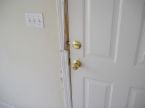 Today we got a new customer. He found us through our print advertising when he looked up someone to repair his kicked in door.
Apparently he was out of town and returned to find that someone had broken into his house. It had all the hallmarks of a break-in. I don't remember the exact number, but a speaker at a meeting I attended said that the vast majority of burglars go right through the front door. That's crazy.
Typically when someone kicks in a door, the deadbolt (or door latch) pulls through the strike jamb (the vertical piece of wood that the door latches into). More damage occurs when the deadbolt chips out the interior door molding. So the strike jamb and the molding need to be replaced. Our new customer expected to come home and relax and instead found an unexpected expense.
However, the customer looked at it as an opportunity. He had wanted to upgrade his front door anyway, and so instead of having us repair the old door, we replaced it with a new door.He was very happy and although he didn't plan on doing it now, he got what he wanted, although a little sooner than he planned.
I think most people would have looked at this as a lemon. This customer, however, made lemonade.